On many occasions, a step that precedes the deed is that of the preliminary contract (the so-called 'compromesso'). This is essentially an agreement between the seller and the buyer whereby they mutually obligate each other to enter into a subsequent, final purchase contract.
The transfer of title to the real estate will only occur with the signature of the latter.
As a rule, a preliminary contract is concluded when immediate sale is not possible: why?
for example, the buyer is seeking financing (a mortgage) or the seller is waiting for a new house to be delivered. The reason for concluding the preliminary contract is precisely to legally bind the parties during the time it takes to resolve these issues. The preliminary contract of sale must be registered within twenty days of signing.
Registration is due:
registration tax of EUR 200, irrespective of the purchase price stamp duty of EUR 16 for every 4 sides and in any case for every 100 lines.
TAX AND HOME: BUYING AND SELLING
If the preliminary agreement is concluded by notarial deed, the registration is performed by the notary within
thirty days.
When the contract provides for a payment, the proportional registration tax is due: 0.50% on the sums provided for by way of deposit, 3% of the sums provided for by way of down payment on the sale price. In these cases, the tax due for the registration of the final contract will then be
deducted from the amount paid on the preliminary agreement. If there is no express qualification for the sums paid on the conclusion of the preliminary contract, or if the intention of the parties as to their nature is doubtful, the sums are to be regarded as down payments.
CONTRACT SUBJECT TO VAT
Even when the transfer is subject to VAT, the tax treatment of the preliminary will be
different depending on whether it provides for the payment of a sum as a down payment or as a deposit
confirmatory payment. The payment of an advance, representing the anticipation of the agreed consideration, shall be
invoiced with tax charged. In this case, registration tax will be due in the amount of
fixed (200 euro).
The down payment, even if provided for in a specific contractual clause, does not
constitutes the consideration for the provision of services or the supply of goods.
The same is not, therefore, subject to VAT and proportional registration tax will have to be paid.
TRANSCRIPTION OF THE PRELIMINARY CONTRACT
As mentioned above, the conclusion of the preliminary only creates a legal obligation between the seller and
purchaser, without resulting in the transfer of ownership.
Therefore, it could happen that, despite the 'compromise', the seller still sells
property to another person, constitutes rights in rem of enjoyment over it (
e.g. a usufruct) or register a mortgage.
In such cases, the buyer may only ask the court for damages, not also
the cancellation of the sale or registration of the mortgage.
To avoid such a situation, the law provides the instrument
of the transcription of the preliminary in the land registers.
Thus, any sales of the same property or the establishment of other rights in favour of
third persons shall not prejudice the rights of the buyer.
The transcription of the preliminary agreement requires the intervention of a notary public. In this case,
to the registration tax and stamp duty is added the payment of tax
mortgage of EUR 200 and mortgage taxes.
New Energy Performance Certificate in force since 1 October 2015.
DO YOU HAVE TO SELL OR RENT YOUR HOUSE?
A.P.E. Energy Performance Certificate required.
Contact us now to get your certificate!
As of 1 October 2015, the new energy performance certificate (APE) came into force.
Here is a summary of the main novelties, which affect both property owners and professionals in charge of issuing the certificate.
The new APE encompasses all the energy characteristics of the building and becomes a kind of 'energy plaque' of the building.
How does the evaluation of energy efficiency change?
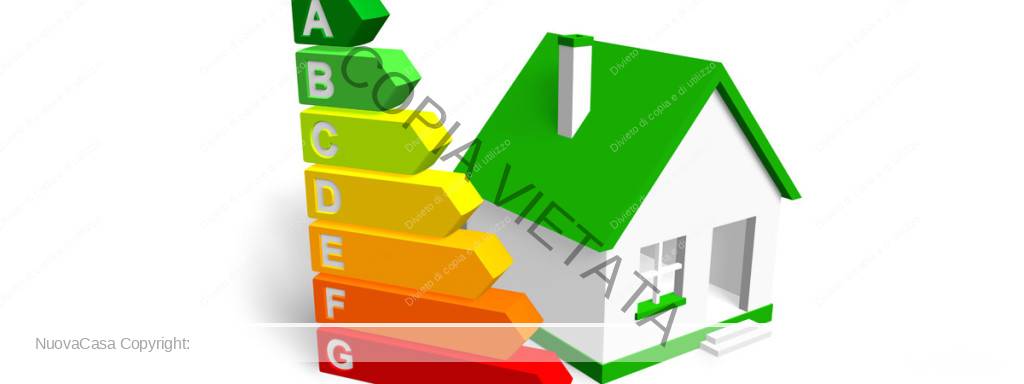
- The energy classes are 10 and no longer 7 and are indicated by letters ranging from A to G; the first four levels will all be in class A (from A4, highest efficiency, to A1).
- In addition to the energy class based on the overall non-renewable energy performance index, the winter and summer energy performance of the envelope net of the performance of the systems present will also be indicated.
What will be assessed for the purpose of issuing the APE?
The evaluation takes the following aspects into account:
- the energy requirement for winter air conditioning;
- the production of domestic hot water;
- the quality of the building's masonry (building envelope);
- summer air-conditioning;
- for buildings for non-residential use, artificial lighting and the transport of persons or goods.
Who applies for the APE and who issues it?
- The obligation to apply for an energy performance certificate is the responsibility of the owner or, in the case of new construction, renovation or major refurbishment, of the builder.
- The professional called upon to issue the energy performance certificate must meet all the requirements set out in Presidential Decree 75/2015, must be nationally accredited and is obliged to carry out a physical inspection of the building.
What is the duration of the EPA?
- The energy performance certificate is valid for ten years, unless the building has undergone renovation or redevelopment that has changed its energy performance. In the latter case, the certificate must be reissued.
What are the sanctions?
- If an untruthful certificate is issued, the professional is liable to an administrative penalty of between EUR 700.00 and EUR 4,200.00.
- In the event of non-compliance on the part of the owner or builder, the applicable sanction ranges from EUR 3,000.00 to EUR 18,000.00.
- If the certificate is missing, in the case of a sale or lease, the penalty applied is:
- for the owner, from 3,000.00 to 18,000.00 euro
- for the seller, from 300.00 to 1,800.00 euro
Article 1385 of the Civil Code defines a security deposit as a sum of money or quantity of fungible things paid as security and in connection with a contractual performance.
ART. 1385 "If at the time of the conclusion of the contract one party gives the other, by way of a deposit, a sum of money or a quantity of other fungible things, the deposit shall, in case of performance, be returned or set off against the performance due. "If the party who gave the deposit is in default, the other party may withdraw from the contract, retaining the deposit; if the party who received the deposit is in default, the other party may withdraw from the contract and claim double the amount paid"..
In this regard, it should be noted that the Property purchase proposalaccepted by all parties, becomes for all legal purposes a Preliminary Sale Agreement and the Confirmatory Deposit thus takes on its legal value.
The Confirmatory Deposit is not represented by standard figures; it is usually highlighted in the 15/20% of the price agreed upon by the parties, at the negotiation stage.
Fiscal Aspect:
The Confirmatory Deposit is taxed at 0.5% at the relevant tax office, in addition to fixed charges and stamps, which are compulsory for the validity of the registration of the preliminary.
This amount is consecutively deducted from the registration taxes on the final Deed of Sale.